
CRDT
CRDT stands for Conflict-Free Replicated Data Type. It’s a type of data structure designed for distributed systems where multiple replicas of data exist across different nodes, and these replicas can be modified independently. Resources
Quorum vs consensus
-
Quorum Systems (e.g., Cassandra, DynamoDB) prioritize liveness. They use voting mechanisms () to allow operations to succeed even when some nodes are unreachable. They are the “muscle” of high-scale data storage, ideal for massive read/write workloads where downtime is unacceptable.
-
Consensus Systems (e.g., Etcd, Zookeeper) prioritize safety. They use protocols like Raft or Paxos to ensure all nodes agree on a single history of events. They are the “brain” of a distributed system, ideal for critical metadata, locking, and configuration.
quorum-based protocol
The quorum-based protocol is the key to reaching a consensus on a value within a distributed database. You’ve two quorums:
-
The Read Quorum: When a client wants to read data, it needs to receive responses from a certain number of zones (known as the read quorum). This is to make sure that it gets the most up-to-date data.
-
The Write Quorum: When the client wants to write data, it must receive acknowledgment from a certain number of zones to make sure that the data is written to a majority of the zones.
Consensus
-
Key Protocols:
-
Paxos: The academic standard. mathematically proven but notoriously difficult to implement correctly.
-
Raft: Designed for understandability. Uses a clear “Leader Election” “Log Replication” phase. Widely used (Kubernetes via Etcd).
-
Zab (ZooKeeper Atomic Broadcast): Specialized for primary-backup systems. Guarantees that writes from a primary are delivered in order.
-
-
Failure Mode: Stop-the-world. If the leader fails, the system pauses writes until a new leader is elected (typically milliseconds to seconds).
Raft Consensus Protocol
Raft is a consensus protocol designed for distributed systems, particularly for achieving consensus in a fault-tolerant manner. It’s widely used in modern distributed systems, including cloud-native applications, databases, and file systems.
What is Consensus?
In a distributed system, consensus refers to the process of agreeing on a single value or state among multiple nodes or replicas. This is crucial in ensuring data consistency and availability, even in the presence of failures or network partitions.
Raft Consensus Protocol:
Raft is a consensus protocol developed by Diego Ongaro and John Ousterhout in 2013. It’s designed to be more understandable, scalable, and fault-tolerant than its predecessors, such as Paxos.
Raft works by electing a leader node, which is responsible for managing the replication of data across the cluster. The protocol ensures that the leader node is always up-to-date and that all nodes agree on the same state.
Key Components:
- Leader Node: The leader node is responsible for managing the replication of data and ensuring consistency across the cluster.
- Follower Nodes: Follower nodes replicate the data from the leader node and participate in the consensus process.
- Term: A term is a period of time during which a leader node is elected and serves the cluster.
- Log: The log is a sequence of entries that represent the state of the system. Each entry is assigned a unique index and term.
Raft Protocol Steps:
- Leader Election: Nodes in the cluster vote for a leader node. The node with the most votes becomes the leader.
- Log Replication: The leader node replicates its log to the follower nodes.
- Heartbeats: The leader node sends periodic heartbeats to the follower nodes to maintain its leadership.
- Log Consistency: Follower nodes verify the consistency of their logs with the leader node’s log.
- Conflict Resolution: In case of conflicts, the leader node resolves them by rolling back the conflicting entries and re-applying the correct ones.
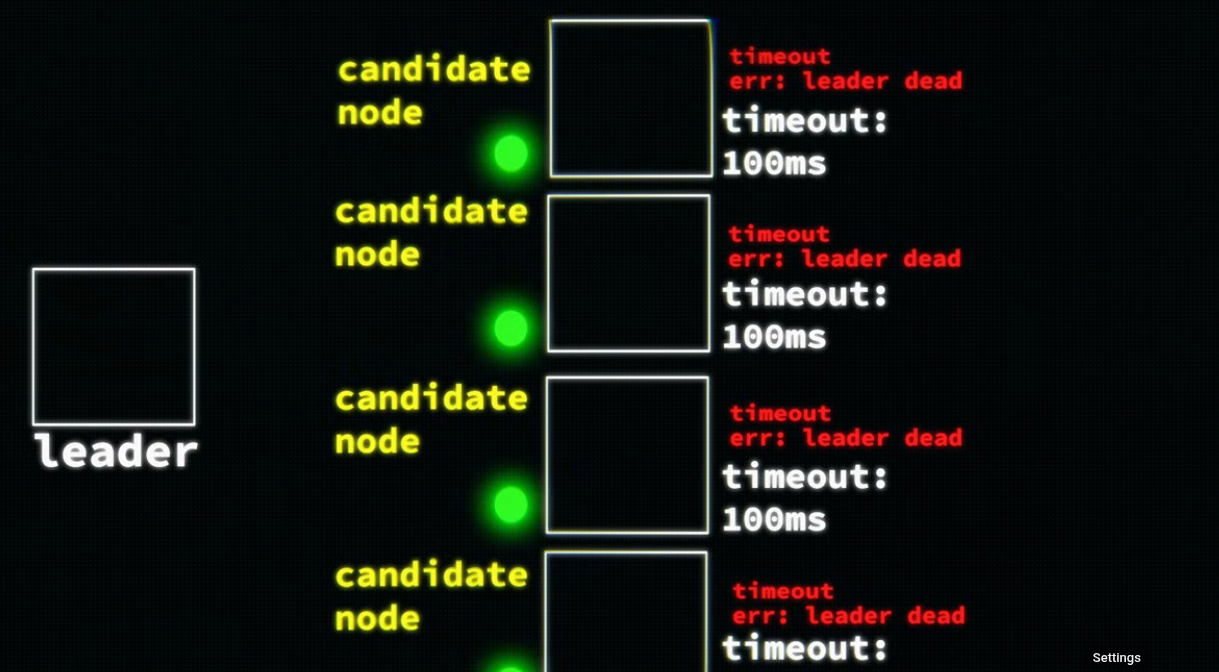
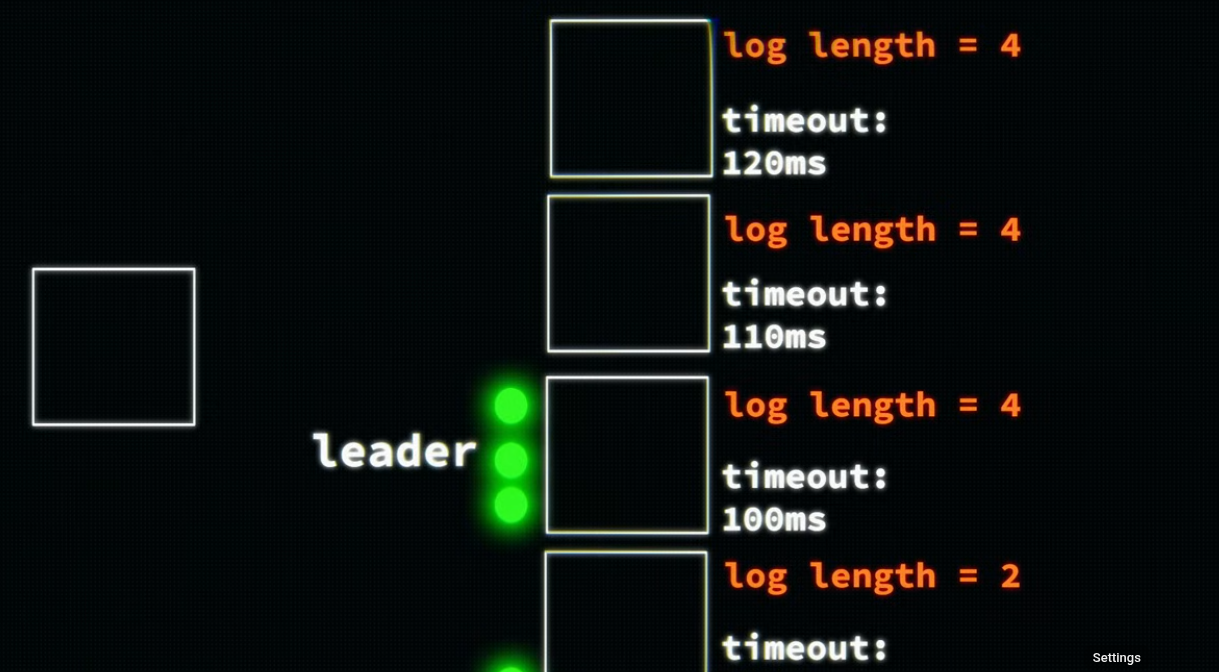
When leader is out of service all other will be candiate node and each node have random timeout where if leader unavalible for specific time let be in the election we have random time such that not all will be candiate node and all other will put vote if two node in elelction which one has high latest log they will win
Raft’s Advantages:
- Fault Tolerance: Raft can tolerate up to (n-1)/2 node failures, where n is the total number of nodes in the cluster.
- Scalability: Raft is designed to scale horizontally, making it suitable for large distributed systems.
- Understandability: Raft’s design is more intuitive and easier to understand than other consensus protocols.
Resources
- https://www.allthingsdistributed.com/ [_Werner Vogels on building scalable and robust distributed systems]
- https://muratbuffalo.blogspot.com/2020/06/learning-about-distributed-systems.html _
- https://www.somethingsimilar.com/2013/01/14/notes-on-distributed-systems-for-young-bloods/
Tools to monitor
- StatsD is originally a simple daemon developed and released by Etsy to aggregate and summarize application metrics
Product [sass]